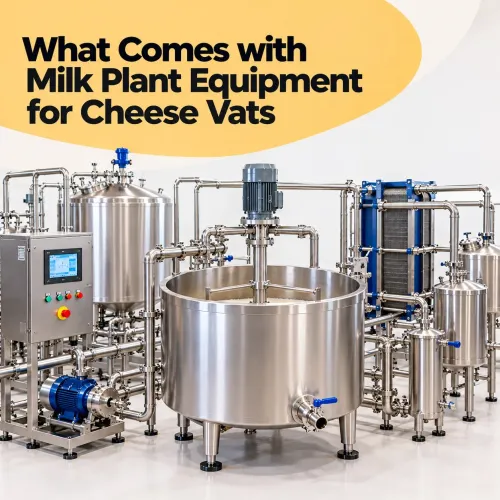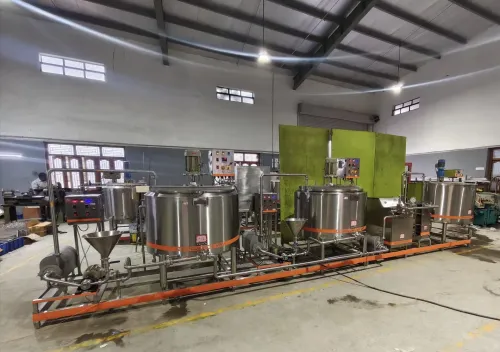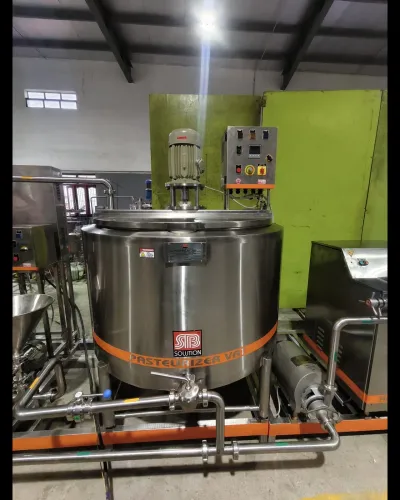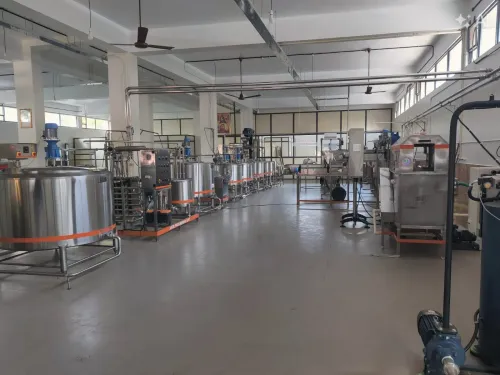
A vat pasteurizer must do more than heat milk: it must deliver a verified time-temperature treatment, cool at the right rate, support culture and coagulation, and handle curd without excessive fines or whey loss. By comparing vessel design, capacity, utilities, controls and automation, you can specify equipment that fits your cheese process rather than buying a pasteurizer that becomes a bottleneck.
Key takeaways
- Size the vat for usable working volume, not its total shell capacity.
- Match cutting speed, agitation and temperature steps to the cheese recipe.
- Compare heating, cooling, CIP cleaning and service access before installation.
- Request calibration records, automation details and local support terms.
What the Vat Must Do from Milk Reception to Curd Cutting
A vat pasteurizer for cheese sits between milk reception and curd handling: milk is filtered or clarified, transferred into the vat, heated, held, cooled, cultured, coagulated and cut. It must control the whole batch, not merely warm milk.
- At reception, confirm volume, temperature and milk quality before transfer; filtration removes visible particles but does not replace pasteurization.
- Heat through the jacket without diluting the milk. The batch-pasteurization reference is 63°C for 30 minutes; the controls must prove that temperature and time throughout the batch.
- Cool to the culture and rennet temperatures, then add ingredients with gentle, even agitation. Excessive shear damages developing curd.
- After coagulation, use curd knives to produce the specified grain size. Cut too aggressively and fines escape with the whey; cut too slowly and moisture becomes uneven.
- Stir, drain or transfer curd through an outlet designed for the product, then send the vat through its validated cleaning cycle.
A jacketed vessel avoids the volume and composition change caused by direct steam injection. Specify spray coverage, flow, chemical concentration, temperature and time for the actual vat, outlet, valves and agitator shaft; “CIP capable” alone proves little.
Equipment comparison:
| Machine | What it does | What it cannot assure |
|---|---|---|
| Cheese vat | Heats, cools, cultures, coagulates, cuts, stirs and drains curd | It still needs correctly selected knives, agitator and outlet |
| Vat pasteurizer | Heats, holds and cools milk with agitation | It may lack curd knives, whey drainage and low-shear curd handling |
| Jacketed processing tank | Provides indirect heating or cooling and mixing | It is not automatically pasteurizing or cheesemaking equipment |
How to Size the Vat and Prevent Curd and Whey Loss
Size by working volume, not geometric volume. Set the batch around the milk available, expected cheese yield and transfer time, then leave headspace for foam, curd expansion and safe whey drainage. Ask the supplier to state minimum and maximum working volumes, plus heating, cooling and agitation performance at both levels.
| Feature | Specify | Why it matters |
|---|---|---|
| Vessel dimensions | A shallow, wide vessel with enough depth for the planned curd bed | Excessive depth makes cutting and temperature control uneven; excessive width can overload the agitator |
| Agitator clearance | The shaft, paddles and blades must clear the wall, bottom, outlet and curd knives throughout rotation | Contact damages equipment; tight clearances trap curd and create fines |
| Curd knives | Rigid stainless frames with accurately spaced vertical and horizontal cutting elements, sized for the target grain | Blunt, flexible or widely spaced knives produce uneven curd and increase whey losses |
| Outlet configuration | A low, flush, large-bore sanitary outlet with a full-port valve and short, drainable connection | Narrow outlets plug with curd; ledges and dead legs retain product |
Specify these points in the cheese vat equipment quotation:
- Give the working volume, not just total litres, and identify the level at which whey removal begins.
- Select the agitator for cut curd, not only milk. Excessive shear breaks grains into fines; weak agitation leaves uneven moisture and localised acidification.
- Require a gentle curd-transfer route, with no sudden drops, restrictive valve seat or unprotected pump inlet.
- Confirm that the knife frame can be removed, inspected and cleaned without leaving curd behind.
Match Temperature, Agitation and Cutting to the Cheese Style
A vat pasteurizer for cheese must control product temperature, hold time, agitator speed and knife movement independently. Specify a calibrated product probe and data logging: 63°C for 30 minutes or 72°C for 15 seconds covers common pasteurization references, but the recipe determines coagulation and curd treatment.
| Style | Temperature and process controls | Agitation and cutting |
|---|---|---|
| Paneer | Heat milk to 85–90°C, hold 5–10 minutes, then cool to the acid-coagulation temperature specified by the recipe. | Use gentle agitation during acid addition; avoid vigorous mixing after flocculation. Cut or break the firm coagulum into large pieces before draining. |
| Cheddar | Cool pasteurized milk to about 30–32°C for culture and rennet, then cook curd gradually to 38–39°C. | Cut into 6–12 mm grains; use slow, even stirring to prevent fines, then provide controlled whey drainage for cheddaring. |
| Mozzarella | Set near 32–35°C, then develop acidity before stretching; cook curd around 38–42°C when the recipe requires it. | Cut 10–15 mm grains and stir gently. The vat must support clean curd transfer without crushing grains. |
| Gouda | Set near 30–32°C and cook toward 36–38°C while replacing part of the whey with water. | Cut 8–12 mm grains; low-shear agitation preserves moisture during washing. |
| Soft cheese | Hold the culture and coagulation temperature prescribed for the starter, with no aggressive cooking step. | Cut large, often 15–25 mm pieces, or ladle the gel; provide very gentle movement and early drainage. |
Specify variable-speed agitation, reversible knife operation and a drain outlet that does not shear curd. Verify cooling capacity separately: slow cooling delays culture addition and changes moisture.
Compare Heating, Cooling and Cleaning Systems Before Installation
For most cheese plants, an indirect hot-water jacket paired with chilled water gives the best balance: precise heating, gentle cooling, no product dilution and straightforward cleaning. Steam-jacket heating suits high-throughput sites with a reliable boiler, while electric heating simplifies installation but can impose a heavy electrical load.
| Option | Control and speed | Installation and utility demand | Cleaning and site fit |
|---|---|---|---|
| Hot-water jacket + chilled water | Smooth temperature control; moderate cooling speed | Requires hot-water generation, chilled-water supply and insulated lines | Easy to drain and clean when jacket and outlets are hygienically designed |
| Steam jacket + chilled water | Rapid heating; strong response at high throughput | Needs boiler capacity, condensate return, refrigeration and steam-rated safety controls | Good for continuous production, but inspect steam traps and condensate systems |
| Electric jacket + refrigeration unit | Accurate control at small batch sizes; cooling speed depends on refrigeration capacity | Lower pipework cost, higher connected electrical load | Simple utility layout; confirm panel ventilation, washdown protection and refrigerant service |
Avoid direct steam injection unless the recipe and controls account for condensate entering the milk. It changes batch volume and composition.
Specify separate figures for steam or hot water, chilled-water temperature, electrical load, wash-water flow, drainage and effluent capacity. These determine batch time more than nominal vat volume.
For dairy plant machinery in coimbatore, require a site test using the intended milk volume, agitator speed and utility conditions. Record heating and cooling curves, temperature uniformity, CIP coverage, drainability and control interlocks. Request spare-part lists for seals, probes, valves and agitator components, plus calibration and refrigeration-fault response support.
Specify Automation, Testing and Local Service Support
Require the operating level that matches your labour, batch consistency and records. Manual operation needs readable temperature, time and speed displays, guarded controls, an independent safety cut-out and hand-operated curd tools. Semi-automatic operation should run heating, holding, cooling and agitation from recipes while allowing the operator to confirm culture addition and curd condition.
Automated operation needs recipe access control, batch-data export, alarms, interlocks, calibration records and manual override.
Ask the supplier to demonstrate these acceptance checks:
- Run a full milk batch: confirm temperature uniformity, holding time, agitation, cooling rate and recorded data at several vessel points.
- Cut and stir real curd: inspect knife clearance, curd size, whey drainage, outlet flow and transfer without curd trapping.
- Load every utility: verify steam or hot-water pressure, chilled-water temperature, electrical load, drainage and effluent handling against the site design.
- Execute the cleaning recipe: measure flow, chemical concentration, temperature and time, then inspect the outlet, valve seats, agitator shaft and spray-device coverage for shadow areas.
- Test alarms, sensor calibration, emergency stops and independent pasteurization verification, including alkaline-phosphatase testing where applicable.
For dairy plant machinery vat for pasteurizer in Coimbatore, obtain seal, probe, valve and agitator spare-part lists, calibration support and a written response plan for control-panel or refrigeration faults. Select Best Solution should be assessed on that evidence, not the nameplate volume.
Compare cheese processing equipment in Coimbatore by demonstrated curd handling and CIP performance, not heating alone.
Related product
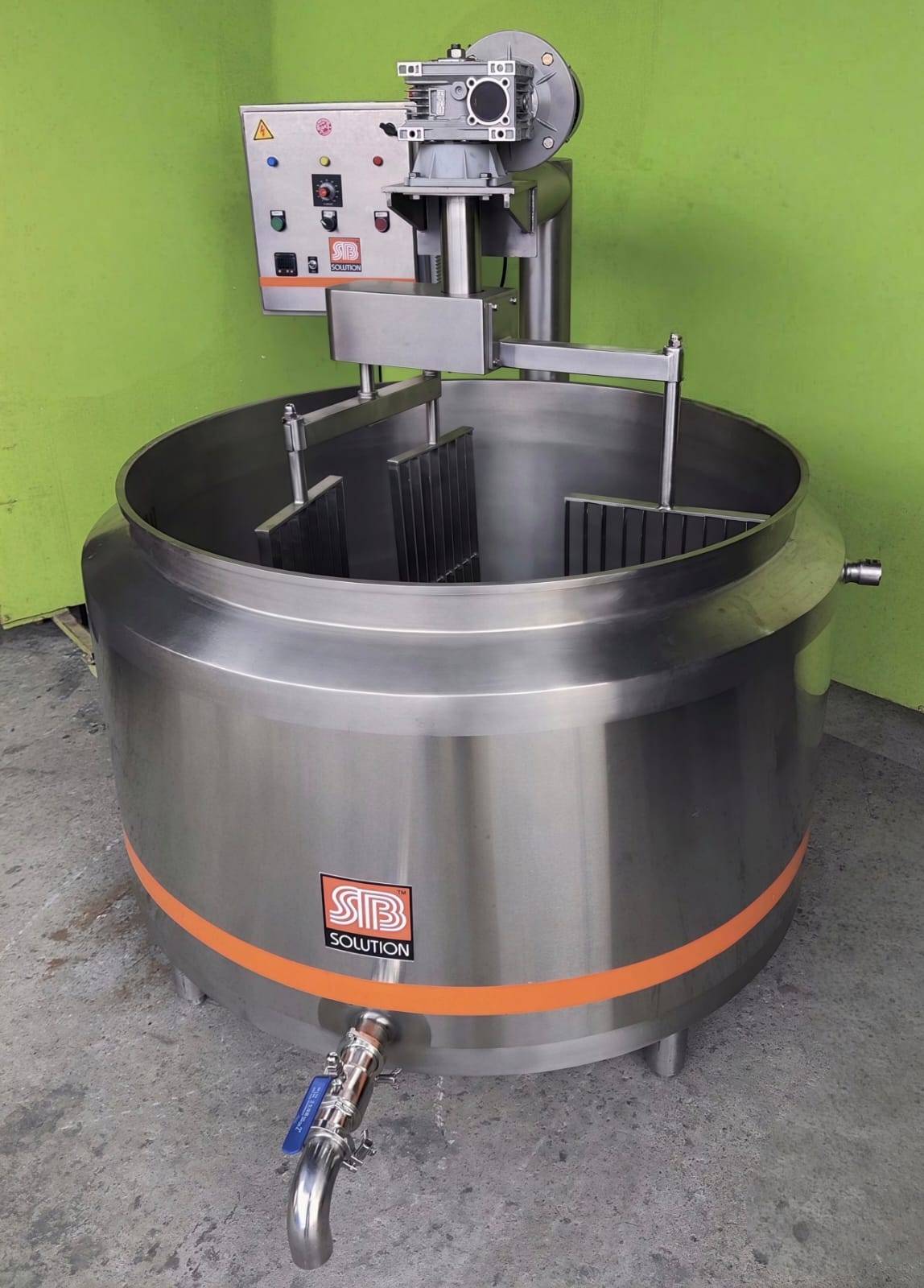 | Cheese Vat Manufacturers in Coimbatore - select best solution coimbatore View product → |
Frequently asked questions
What must a vat pasteurizer do in cheese production?
It must heat, hold, cool, culture, coagulate and cut each batch while controlling temperature, agitation and transfer to curd handling.
How do you size a cheese vat without losing curd or whey?
Calculate usable working volume from batch size, headspace, agitation clearance and curd-cutting space rather than selecting the vat by total volume.
Why do temperature, agitation and cutting settings vary by cheese style?
Cheese styles need different heating and cooling profiles, stirring intensity and cutting dimensions because these settings control curd firmness, moisture and whey drainage.
What should you compare before installing cheese processing equipment?
Compare heating and cooling response, agitator design, CIP coverage, drainability, controls, testing documents, calibration and local service access.
Keywords