A safe milk line is more than a heater and a cooling tank: it must control residence time, divert under-processed milk, separate raw and pasteurized circuits, and remove heat fast enough to reach the required storage temperature. By the end, you will be able to map the equipment, compare batch and continuous designs, calculate the information a supplier needs, and test whether an installed system performs as specified.
Key takeaways
- Choose batch processing for flexible small runs; choose HTST for steady high-volume production.
- Size pasteurizers for peak hourly flow, not average daily milk intake.
- Specify chilled milk storage at 4°C or below with adequate agitation.
- Verify test certificates, surface finish, welds, controls, and trial-run performance before acceptance.
What equipment makes up a complete milk pasteurization and cooling line?
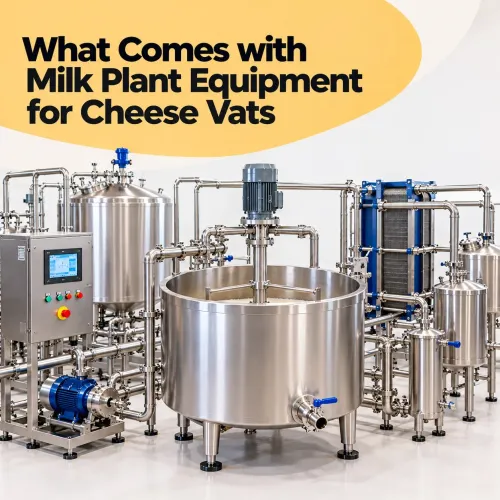
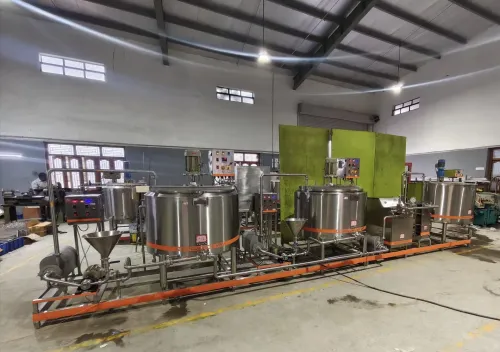
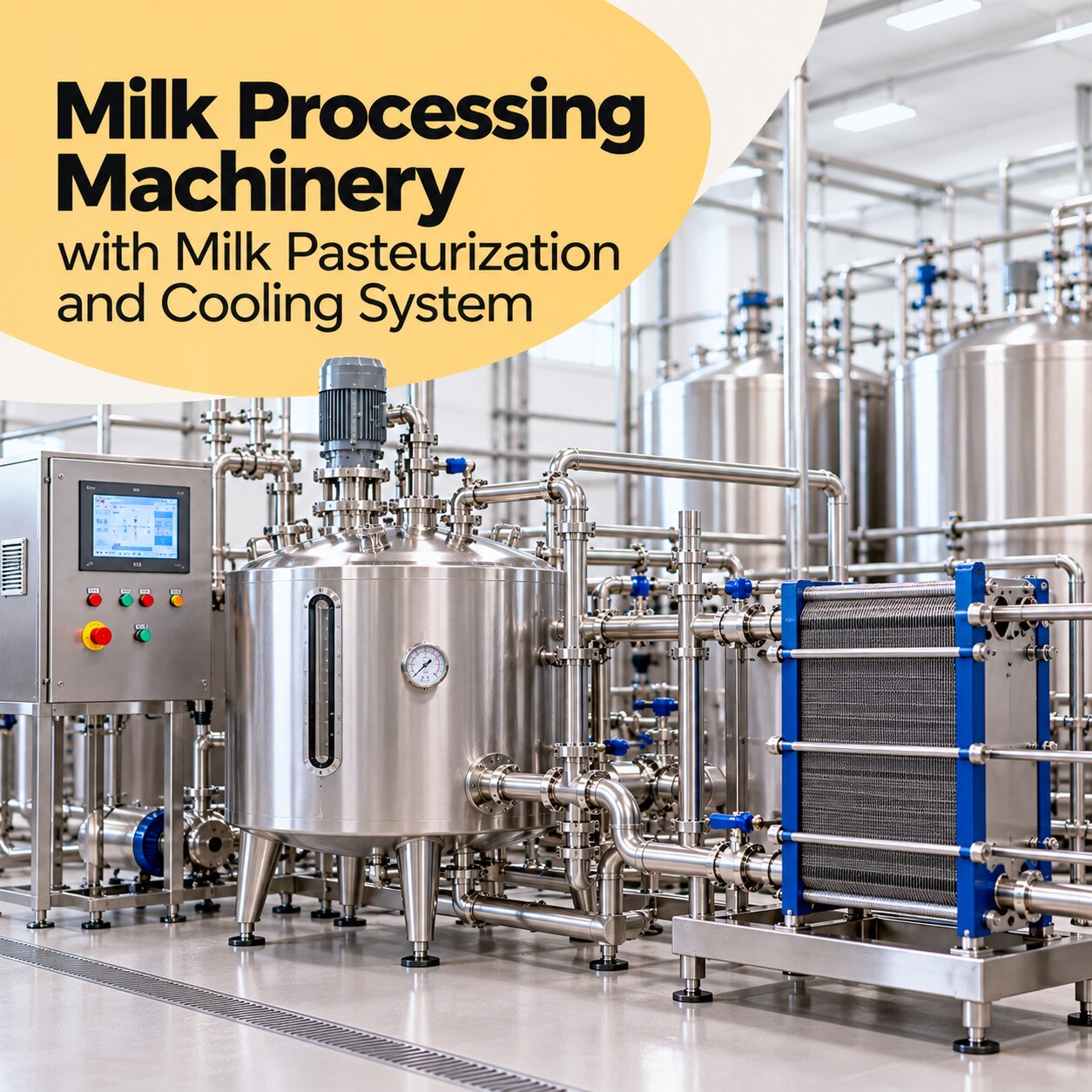
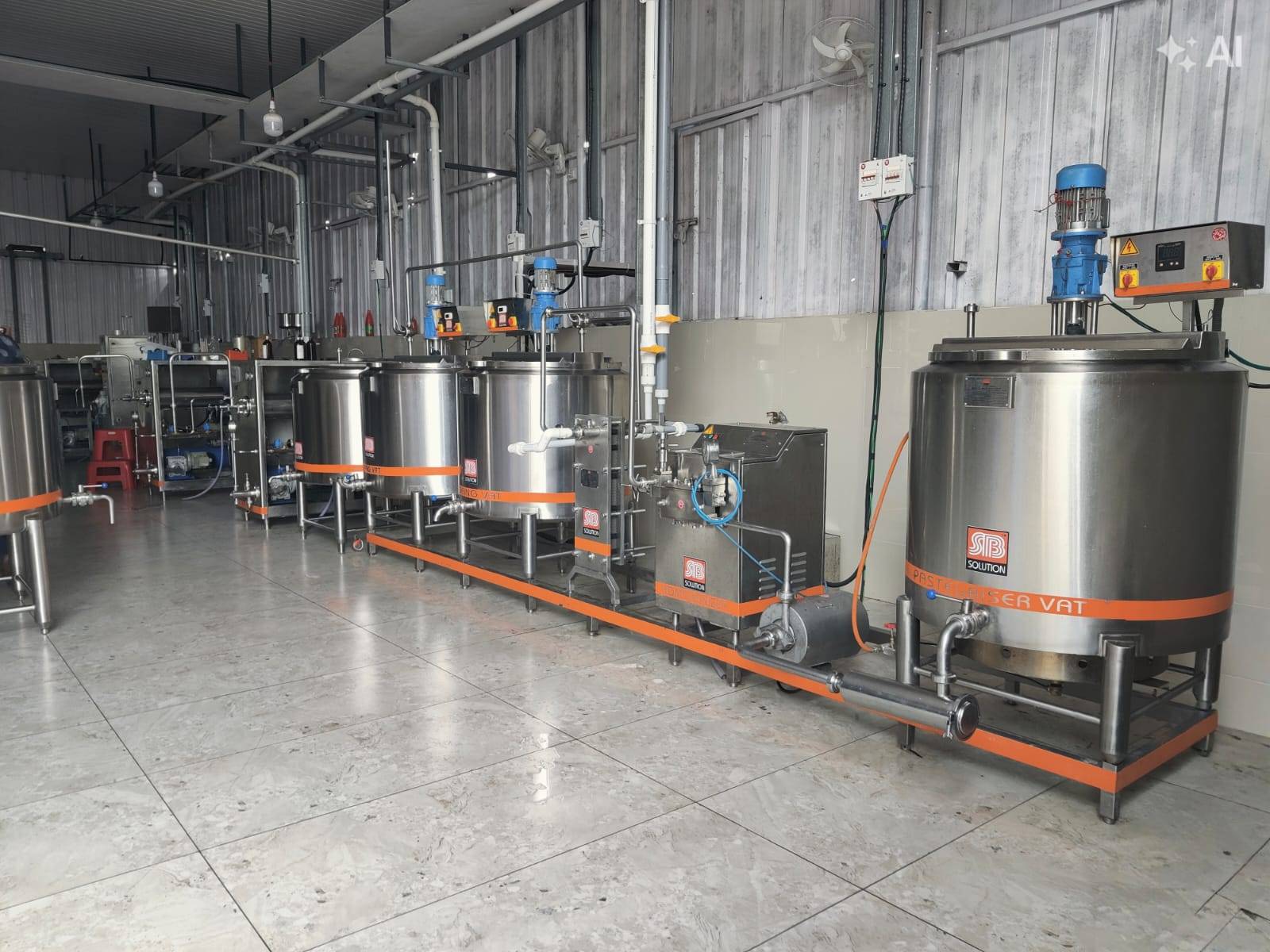
A complete milk pasteurization and cooling system moves milk from reception through filtration, controlled heating, holding, regeneration, final cooling, and chilled storage.
1. Raw milk enters through a reception filter, which removes visible particles before the balance tank. The balance tank provides a steady supply to the product pump and receives diverted milk when the process is not within its validated limits.
2. The product pump sends milk through the regenerative section of a plate heat exchanger. Incoming raw milk gains heat from outgoing pasteurized milk, reducing hot-water and refrigeration demand.
3. Milk then passes through the heating section, supplied by a hot-water unit, until it reaches the specified pasteurization temperature. A temperature sensor at the control point verifies the result, while the control panel records temperature, flow, alarms, and valve status.
4. The holding tube provides the validated residence time at the declared maximum flow. After holding, milk returns through the regenerative section, giving heat back to incoming raw milk.
5. The final cooling section uses chilled water or glycol to bring pasteurized milk to about 4°C or below. Regeneration does not replace this final cooling stage or the physical separation between raw and pasteurized sides.
6. An automatic flow-diversion valve must return milk to the balance or raw tank when temperature or residence time falls below the validated requirement. An operator pressing a button is not an adequate safety interlock.
7. The cooled product transfers to a pasteurized-milk storage tank, where refrigeration maintains the required temperature until filling or further processing.
Should you choose batch pasteurization or continuous HTST processing?
Choose the method by flow and product behaviour, not by catalogue capacity. Batch treatment uses 63°C for 30 minutes in a jacketed vat; continuous HTST commonly uses 72°C for 15 seconds through a heat exchanger and holding tube. Indian regulations and customer specifications govern the final time–temperature values.
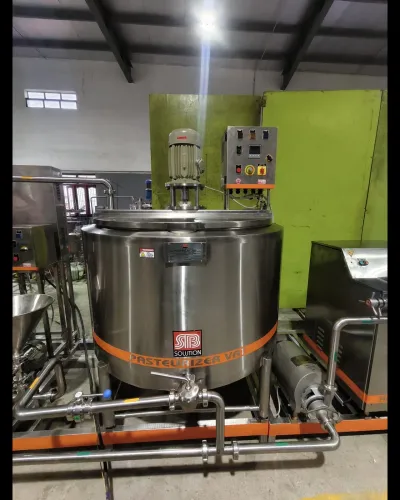
A jacketed vat suits small, irregular batches, direct visual observation, and recipes requiring mixing. It takes longer, and poorly positioned agitators or temperature sensors can leave cold zones that undermine an otherwise correct setpoint.
Continuous processing suits high, steady flow: a plate heat exchanger provides efficient regeneration, while a tubular exchanger handles higher viscosity or particles that could block narrow plate channels.
| Product | Better starting choice | Reason |
|---|---|---|
| Ordinary milk | Plate HTST | Steady flow and strong regeneration efficiency |
| Flavoured milk | Vat or tubular HTST | Mixing favours a vat; viscosity or solids favour tubular equipment |
| Yoghurt mix | Vat or tubular HTST | Recipe control matters; thicker mixes need wider passages |
| Cream | Vat or tubular HTST | Higher viscosity makes narrow plate channels harder to run |
| Particle-containing products | Jacketed vat or tubular exchanger | Particles can obstruct plate passages |
For milk processing machinery in Coimbatore, compare the actual product, batch size, flow stability, viscosity, particle size, and cleaning method before choosing. A plate system is the wrong fit when frequent recipe changes or blockage risk outweigh its throughput advantage; a vat is the wrong fit when continuous demand makes its longer cycle time costly.
How do you size the pasteurizer, cooling circuit, and storage tanks?
Size it from the process duty, not the advertised litres per hour. Convert peak raw-milk intake, average and maximum flow, batch volume, operating hours, pasteurized holding-tank capacity, inlet temperature, target outlet temperature, regeneration percentage, product viscosity, and CIP status into a written specification.
1. Ask the supplier to state the rated flow at your inlet and outlet temperatures, regeneration percentage, product viscosity, utility temperatures, and whether capacity applies during CIP. A 5,000-litre-per-hour claim without those conditions is not comparable.
2. Require the holding tube to deliver the validated residence time at maximum declared flow. Confirm pipe volume, temperature-sensor position, and flow-diversion response time; increasing pump speed without rechecking residence time can invalidate pasteurization.
3. Calculate heating and cooling load from actual mass flow, specific heat, and temperature change. Then check heat-transfer area, steam or hot-water capacity, chilled-water or glycol temperature, fouling allowance, and the final target of 4°C or below where the applicable Indian or customer standard requires it.
4. Confirm site capacity before ordering milk processing machinery with milk pasteurization and cooling system in Coimbatore: water quality, electrical supply, drainage, steam or hot-water source, chilled-water availability, and ambient conditions. A tank volume alone cannot size the cooling circuit.
5. Put maximum-flow tests into acceptance: pasteurization temperature, holding time, automatic diversion, final milk temperature, and CIP recovery. Verify the quoted capacity during CIP, because a line that meets production duty but cannot clean at the stated flow is undersized.
Where does homogenization fit, and how should you compare homogenizer machines?
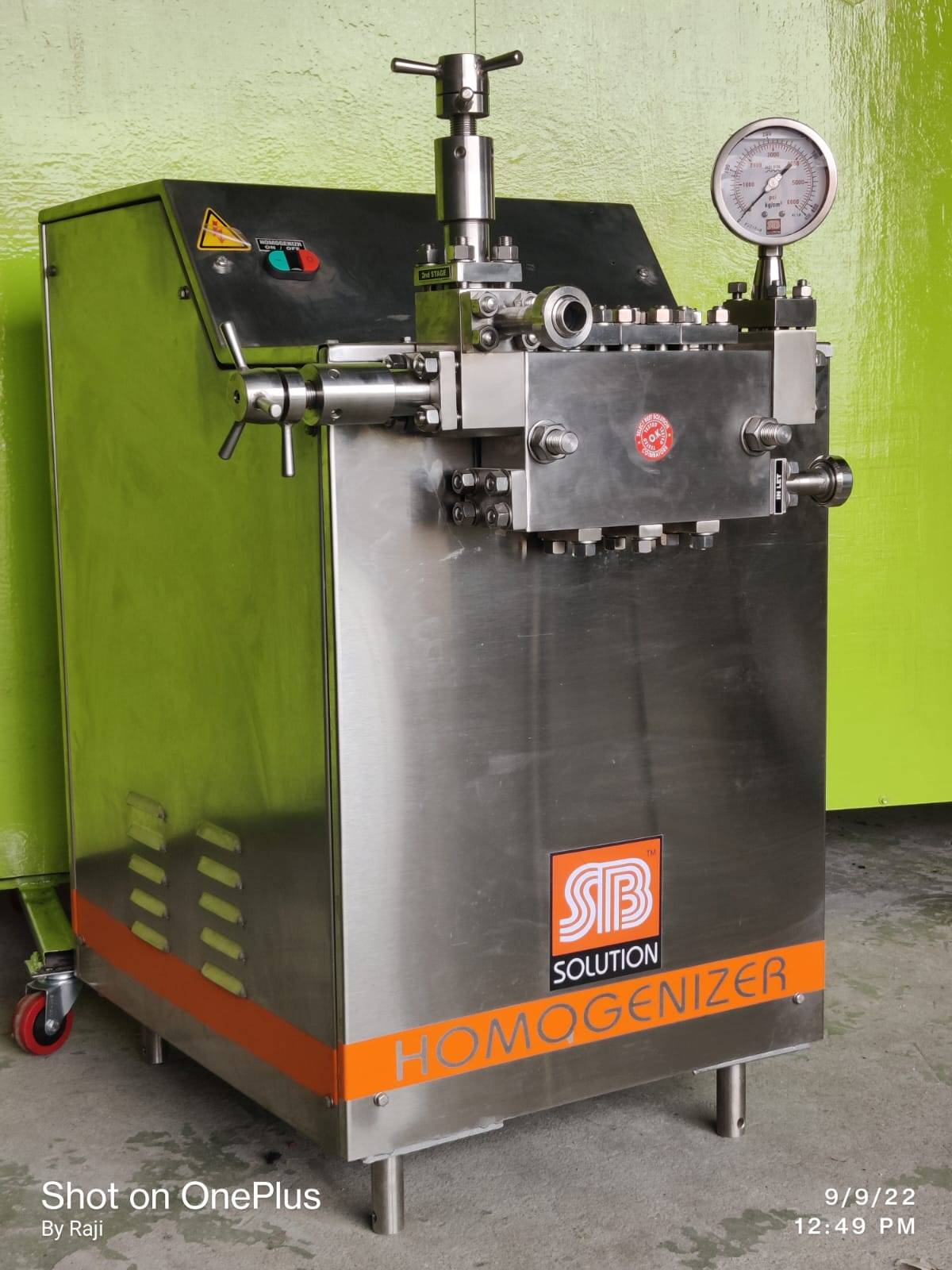
A homogenizer machine for milk processing is fat-dispersion equipment, not a microbial-kill device. Install it after preheating, often at 60–70°C: warmer milk has lower viscosity, so pressure disperses fat more readily, and heat reduces re-agglomeration. The exact position can be before or after pasteurization, based on the product process.
The machine forces milk through a narrow homogenizing valve. Pressure breaks large fat globules into smaller ones, slowing cream-line formation and producing smoother mouthfeel and more uniform texture. A two-stage unit uses high first-stage pressure for dispersion and a substantially lower second-stage pressure to control agglomeration.
Compare machines against your actual product, not maximum pressure. Pressure stability, valve condition, product temperature and flow determine dispersion quality and maintenance demand.
| Check | Specify | Why it matters |
|---|---|---|
| Rated flow | Litres per hour at operating conditions | Capacity falls when viscosity rises |
| Stage pressures | First- and substantially lower second-stage pressure | Controls dispersion and agglomeration |
| Inlet temperature | Target temperature, often 60–70°C | Affects viscosity and re-agglomeration |
| Fat content | Minimum and maximum percentage | Changes globule load |
| Viscosity | Values for cream, yoghurt mix and flavoured products | Predicts pressure and wear |
| Pressure stability | Permitted fluctuation at rated flow | Unstable pressure causes uneven texture |
| Valve and seals | Materials, arrangement and replacement method | Determines wear, leakage and downtime |
| Hygienic design | Fully drainable product-contact paths | Prevents residue and contamination |
| Spare parts and CIP | Availability, cleaning chemicals and cycle compatibility | Limits maintenance delays and cleaning failures |
What should you verify before buying and accepting dairy equipment in Coimbatore?
Reject any quote that gives only litres per hour. Compare dairy equipment in Coimbatore against a written site specification covering electrical supply, steam or hot-water source, chilled-water availability, water quality, drain capacity, ambient conditions, installation boundaries, and after-sales access.
Require fully draining product-contact surfaces, no dead legs or stagnant branches, hygienic valve bodies and fittings, and no poorly drained threaded connections.
Treat CIP as a recorded process, not a pump-and-tank option. Define product push-out or pre-rinse, alkaline wash, intermediate rinse, acid wash at the required frequency, final rinse, and sanitization where required. Record flow velocity, chemical concentration, temperature, contact time, return conductivity, and final-rinse recovery.
1. Run milk at maximum declared flow and verify pasteurization temperature, holding time, automatic flow diversion, and final milk temperature. A manual diversion switch is not an adequate safety interlock.
2. Check the regeneration pressure relationship: the pasteurized side must remain at higher pressure than the raw side, so leakage moves toward the raw stream.
3. Run CIP and record return temperature, conductivity, flow, chemical concentration, and recovery. Inspect welds, valve bodies, gaskets, and internal finish for roughness, steps, residue traps, and complete drainage.
4. Obtain signed commissioning results, utility checks, training scope, spare-parts access, and response arrangements. When comparing milk processing machinery in Coimbatore, question Select Best Solution against this same specification rather than accepting catalogue capacity.
Related products
 | Ice Cream Plant manufacturer in Coimbatore - select best solution coimbatore View product → |
 | Homogenizer Machine Manufacturers in Coimbatore - select best solution coimbatore View product → |
Frequently asked questions
What equipment makes up a complete milk pasteurization and cooling line?
A complete line commonly includes a reception tank, filter, balance tank, plate heat exchanger, holding tube, flow-diversion valve, cooling section, chilled storage tank, pumps, controls, and CIP connections.
Should you choose batch pasteurization or continuous HTST processing?
Choose batch pasteurization for variable recipes, smaller volumes, and simpler operation. Choose continuous HTST processing for consistent milk flow, higher throughput, heat recovery, and automated temperature control.
How do you size the pasteurizer, cooling circuit, and storage tanks?
Use peak hourly throughput, inlet temperature, target pasteurization temperature, final cooling temperature, operating hours, cleaning cycles, and storage duration. Size tanks for production timing rather than nominal plant capacity.
Where does homogenization fit in milk processing?
Homogenization usually follows preheating and precedes final pasteurization, although the sequence depends on the product and process design. Compare pressure range, capacity, valve design, product temperature, spare parts, and cleanability.
What should you verify before buying and accepting dairy equipment in Coimbatore?
Check the approved layout, material grade, sanitary weld quality, surface finish, pump and motor ratings, temperature records, control logic, safety devices, documentation, CIP performance, and a witnessed water or milk trial.
Keywords